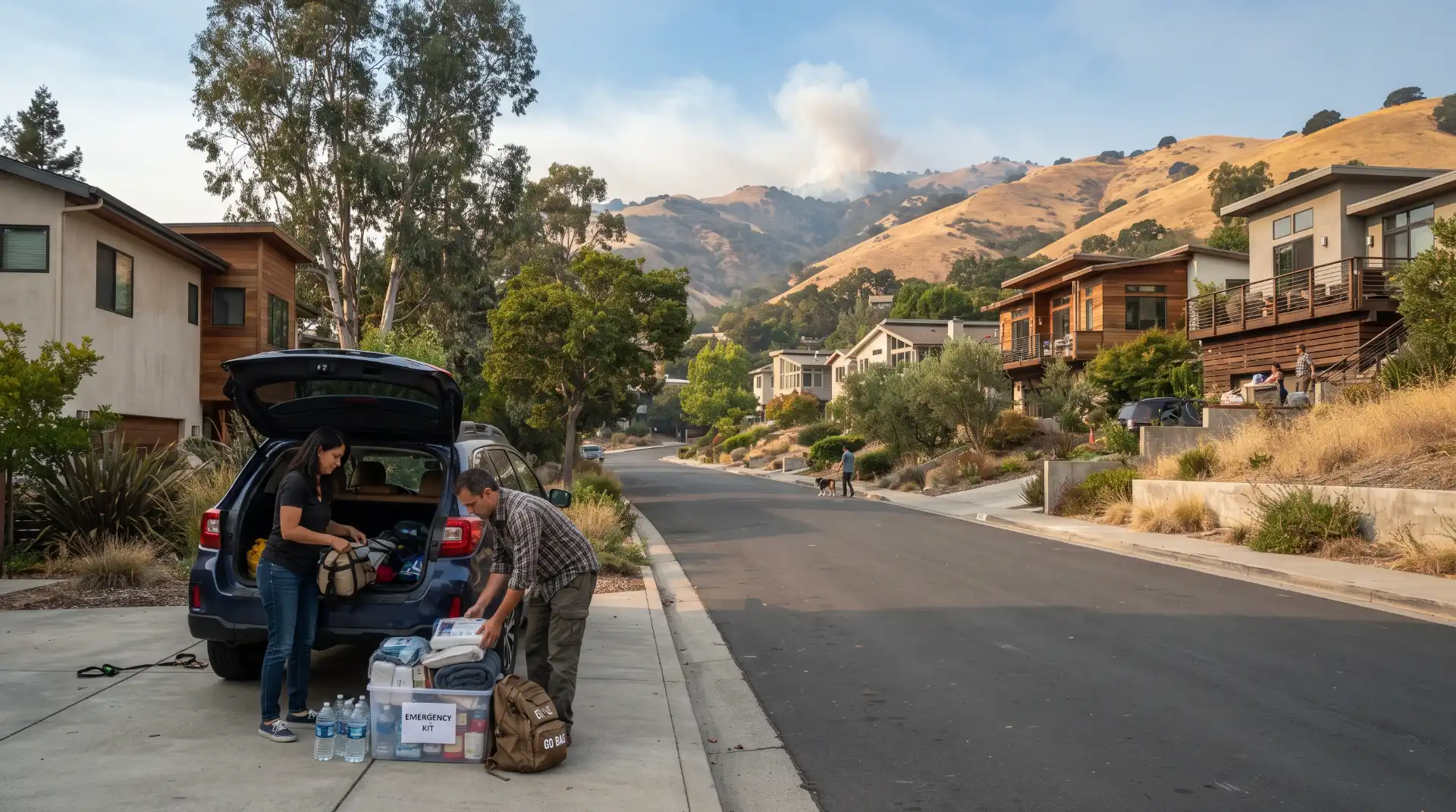
Wildfire preparedness has become an important part of life in Alameda County. For residents of Oakland, Berkeley, Fremont, Hayward, Livermore, Pleasanton, Dublin, San Leandro, Castro Valley, Sunol, and surrounding communities, preparing for wildfire season is not simply about watching the news when a fire starts. It is about knowing where to find official information, understanding evacuation procedures, protecting your home and family, and being ready to leave quickly if conditions change.
The 2026 wildfire season is another reminder that preparation needs to happen before an emergency begins. In July 2026, the Little Fire burned in the Sunol area of Alameda County, reaching 1,007 acres before it was ultimately contained. The incident involved CAL FIRE and Alameda County Fire, and evacuation orders and warnings were issued during the fire.
Events such as this demonstrate why residents should not assume that wildfires are only a concern for remote parts of California. Alameda County contains densely populated urban communities alongside hills, grasslands, open space, canyons, and other landscapes where wildfire can develop and spread.
This Alameda County wildfire preparedness guide explains what residents should know during the 2026 fire season, how to prepare before an evacuation, how to receive emergency alerts, what to keep in an emergency kit, how to protect against wildfire smoke, and what families can do to make an evacuation less stressful.
Why Wildfire Preparedness Matters in Alameda County
Alameda County is geographically diverse. The county includes major urban centers, residential neighborhoods, industrial areas, agricultural land, regional parks, hillsides, and open spaces.
That diversity means wildfire risk can vary significantly from one community to another. Residents living close to hills and open space may face a different level of direct wildfire exposure than someone living in a dense urban neighborhood. However, smoke, road closures, power outages, evacuation traffic, and disruptions to transportation can affect people far beyond the immediate fire area.
The county itself identifies wildfire and wildfire smoke among the emergencies residents should prepare for. Alameda County also warns that disasters can affect communications, transportation, electricity, medical services, food and water supplies, and other essential systems.
This is why wildfire preparedness should be viewed as a household responsibility as well as a community responsibility.
A family does not need to know exactly when or where the next wildfire will occur. Instead, it needs to be prepared to respond if an emergency develops nearby.
The most important preparation is simple: know your evacuation information, know how your family will communicate, keep emergency supplies available, and know where to get reliable information.
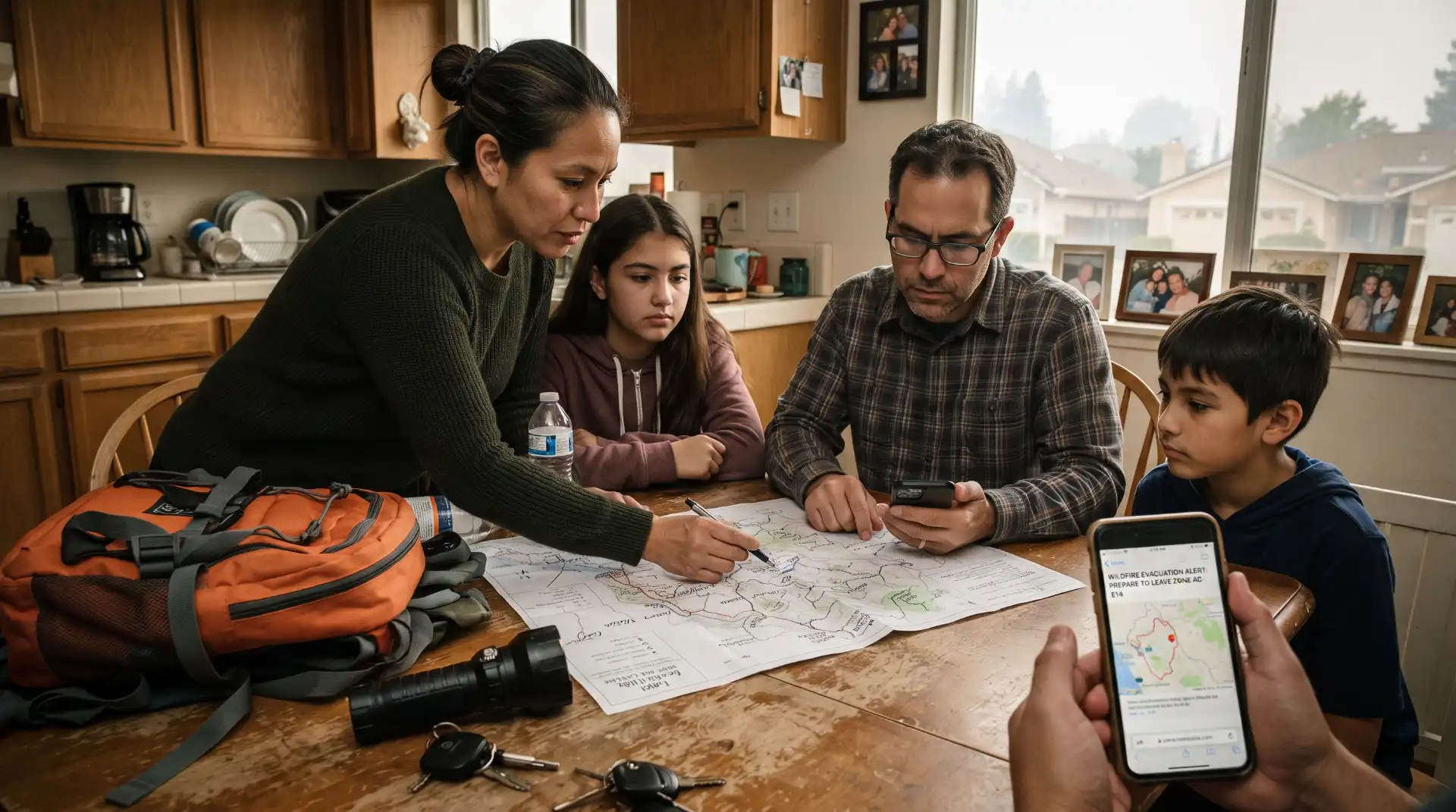
2026 Is a Good Year to Review Your Wildfire Plan
Even residents who created an emergency plan several years ago should review it again.
Phone numbers change. Children grow older. Pets are added to households. People change jobs. Family members move. Vehicles are replaced. Medications expire. Emergency supplies are used and forgotten.
An evacuation plan that worked for your household two years ago may no longer be adequate.
California’s wildfire preparedness guidance emphasizes three major steps before a wildfire: creating a wildfire action plan, assembling an emergency supply kit, and establishing a family communication plan.
Those three ideas provide a useful starting point for Alameda County families.
Think about what your household would do if an evacuation warning arrived while everyone was in different locations.
One person might be at work in Oakland. Another could be commuting through Hayward. A child could be at school in Fremont. Someone else could be shopping in Pleasanton.
The goal is not to predict exactly what will happen. The goal is to eliminate as many last-minute decisions as possible.
Know Your Alameda County Evacuation Zone
One of the most important steps Alameda County residents can take is learning their evacuation zone.
Alameda County provides an emergency information website with current evacuation-zone information, emergency alerts, evacuation and shelter resources, city emergency websites, and links to emergency agencies.
Knowing your evacuation zone is important because emergency officials may issue warnings or orders for specific geographic areas.
Do not assume that an evacuation order for one neighborhood automatically applies to every surrounding community. At the same time, do not assume that an area outside the current evacuation zone will remain safe throughout an active wildfire.
Wildfire conditions can change quickly.
Residents should therefore use official evacuation information rather than relying on neighborhood rumors or old maps circulating on social media.
Before fire season becomes especially active, look up your home and learn the evacuation-zone information associated with your location.
Then consider other locations where members of your household regularly spend time.
Your child’s school, workplace, parents’ home, and regular business locations may all have different emergency procedures.
Sign Up for AC Alert
Emergency notifications are one of the most important tools available to Alameda County residents.
AC Alert is the emergency notification system used by cities and county agencies throughout Alameda County to distribute critical information to people who live, work, or visit the county. The county encourages residents to sign up so they can receive information about fires, floods, earthquakes, and other emergencies.
This is particularly important during a wildfire because conditions can change faster than residents expect.
An evacuation warning may become an evacuation order. A road that was open earlier in the day may close. A fire may change direction because of wind or terrain.
Having emergency notifications sent directly to your phone or other registered contact information can give you more time to respond.
Do not assume that because your neighbor receives alerts, you will receive them too.
Every household should make emergency communication part of its normal preparedness routine.
Residents can find AC Alert information through the official Alameda County emergency website.
Create a Family Evacuation Plan Before You Need It
A wildfire evacuation plan should answer several basic questions.
Where will your family go?
How will you leave?
Who will pick up children?
Who will take care of pets?
What happens if family members are separated?
Where will everyone meet?
What essential medications or equipment need to be taken?
These questions may seem obvious when there is no emergency, but they can become much harder to answer when smoke is visible, phones are ringing, traffic is building, and evacuation instructions are changing.
Alameda County’s emergency planning resources encourage residents to create a family emergency plan and practice it. County guidance also advises residents to evacuate as soon as possible when ordered to do so.
Your plan should include at least two possible destinations if practical.
One could be with relatives or friends outside the immediate wildfire area. Another could be a hotel, shelter, or other location identified during the emergency.
Do not rely on one road.
A wildfire can cause road closures or heavy congestion, so knowing multiple ways out of your neighborhood can be valuable.
However, always follow evacuation directions from authorities. A route that looks logical on a normal day may not be safe during an active wildfire.
Understand the Difference Between an Evacuation Warning and an Evacuation Order
Residents should pay close attention to the language used in emergency notifications.
An evacuation warning generally means residents should be prepared to leave because conditions could require evacuation.
An evacuation order means residents in the affected area should leave according to official instructions.
The exact terminology and procedures can vary depending on the incident and agency, so residents should always follow the instructions included in the official notification.
The important lesson is not to wait until the last possible moment.
If your household requires additional time to evacuate because of young children, elderly family members, disabilities, mobility limitations, medical equipment, pets, or livestock, preparation should begin even earlier.
People who need extra time should discuss their evacuation needs before fire season rather than waiting for an emergency.

Build an Emergency Kit for Your Alameda County Home
An emergency kit can make a major difference during an evacuation or extended power outage.
The county’s emergency preparedness resources recommend maintaining emergency supplies that can support household members during a disaster. Supplies should include basic necessities such as water, food, lighting, communication equipment, first-aid materials, medications, important documents, and other household essentials.
The best emergency kit is one that is ready to grab.
Do not store everything in different rooms throughout the house.
A family may want one primary emergency kit near an easily accessible exit and smaller emergency supplies in vehicles or at work.
Water should be a major part of the plan. Families should also consider food that can be eaten without extensive cooking if electricity or gas service is unavailable.
Keep flashlights available rather than relying exclusively on phone flashlights.
A portable power bank can help keep phones operational when electrical service is unavailable.
Important documents should also be protected.
Consider keeping copies of identification, insurance information, property records, medical information, emergency contacts, and other essential documents in a secure location that can be quickly accessed.
Digital copies can also be useful, provided they are stored securely.
Don’t Forget Medications and Medical Equipment
Emergency planning should take into account the specific needs of every person in the household.
Someone who takes prescription medication may need additional supplies during an evacuation.
Someone who uses an electrically powered medical device may need a backup power plan.
Families caring for elderly relatives or people with disabilities should identify transportation requirements in advance.
This is one reason evacuation planning should happen long before a wildfire begins.
During a rapidly developing emergency, pharmacies may be closed, roads may be congested, and electricity may be unavailable.
Talk with healthcare providers about appropriate emergency planning for medical needs.
The goal is not to create unnecessary stockpiles. It is to make sure essential needs are addressed if normal services are temporarily disrupted.
Prepare Your Pets for Wildfire Evacuation
Pets need an evacuation plan too.
A frightened dog or cat may hide when a wildfire emergency begins. Finding the animal at the last minute can delay evacuation.
Keep pet carriers, leashes, food, water, medications, and other supplies somewhere accessible.
Make sure pets have appropriate identification.
If your pet is easily stressed by loud noises, smoke, or unfamiliar environments, consider how that may affect an evacuation.
Families with multiple pets should think about transportation before an emergency.
Large animals and livestock require even more advance planning.
The key is to avoid making the decision for the first time while an evacuation order is already active.
Prepare Your Car Before Wildfire Season
Your vehicle can be one of your most important evacuation resources.
Make sure your vehicle is properly maintained and that you are not routinely driving with an extremely low fuel level.
Keep an emergency supply kit in your vehicle.
A basic vehicle kit can include water, food, a flashlight, batteries, a phone charger or backup battery, first-aid supplies, blankets, and basic personal items.
If you regularly commute between Alameda County communities, think about what would happen if you were away from home when an evacuation occurred.
Your family plan should account for that possibility.
If an evacuation order is issued, do not use your vehicle to explore the fire area or attempt to drive toward an emergency simply to see what is happening.
Roads may be needed by firefighters, police officers, medical personnel, and evacuation traffic.
Follow official road and evacuation instructions.
Prepare Your Home for Wildfire Conditions
Home preparation is another important part of wildfire readiness.
Residents should regularly remove dead vegetation and other combustible material from areas around structures and follow applicable local fire-safety requirements.
California’s Office of the State Fire Marshal provides wildfire preparedness and mitigation information, including resources related to community wildfire planning and pre-fire planning.
Homeowners should also pay attention to roofs, gutters, vents, decks, fences, landscaping, and vegetation around the property.
Embers can travel ahead of a wildfire and can become a major source of ignition.
That means wildfire preparation is not simply about protecting a property from direct flames.
Reducing combustible material and maintaining the property can help reduce potential vulnerabilities.
Residents should check current requirements for their specific location because regulations and recommendations can vary.
The Hills and Wildland-Urban Interface Deserve Special Attention
Some Alameda County communities are located near hills, open space, and areas where developed neighborhoods meet vegetation.
The Berkeley Hills and Oakland Hills are obvious examples of communities where topography, vegetation, access, and dense development can make wildfire preparedness especially important.
Other parts of the county, including areas around the Tri-Valley and eastern Alameda County, also have grassland and open-space environments where fire conditions can become a concern.
County wildfire planning has included projects related to evacuation route signage in the Berkeley Hills and wildfire alert cameras in the Tri-Valley. A county community wildfire protection planning document identified potential camera locations around Altamont and the Tri-Valley to improve wildfire detection.
These projects illustrate an important point: wildfire preparedness is an ongoing community effort.
Residents should still have their own plans even as agencies improve detection, communications, evacuation coordination, and infrastructure.
Wildfire Smoke Can Be a Countywide Problem
You do not have to live next to a wildfire to be affected by it.
Smoke can travel far beyond the immediate fire area.
For Alameda County residents, wildfire smoke can create poor air-quality conditions even when the fire itself is located elsewhere in the Bay Area or Northern California.
Alameda County notes that wildfire smoke contains fine particulate matter that can irritate the respiratory system and identifies children, older adults, people with pre-existing respiratory conditions, and people experiencing homelessness as groups that may face particular risks.
During a smoke event, residents should monitor current air-quality information and follow guidance from public-health authorities.
Avoid assuming that the sky looking clear automatically means air quality is safe.
Air quality can vary significantly between neighborhoods and over the course of a day.
Residents can use official air-quality resources and county emergency information to determine whether outdoor activities should be limited.
Prepare an Indoor Space for Poor Air Quality
During wildfire smoke events, residents may need to spend more time indoors.
Closing windows and doors can help limit the amount of outdoor smoke entering a building when outdoor air quality is poor.
Residents may also consider appropriate air filtration or portable air cleaners.
If you already have an air purifier, check that it is working before wildfire smoke arrives.
Replace filters according to the manufacturer’s recommendations.
A clean indoor environment can be particularly important for people who are sensitive to smoke.
Alameda County has developed wildfire smoke communication and preparedness resources because smoke events can create significant public-health concerns beyond the immediate fire area.
For current conditions, residents should rely on official public-health and air-quality information rather than simply judging conditions by visibility.
Power Outages Can Make Wildfire Emergencies More Complicated
Wildfire preparedness should also include electricity planning.
Power outages can occur during emergencies, and utilities may sometimes shut off electricity as a precaution during dangerous conditions.
Alameda County includes information about PG&E Public Safety Power Shutoffs among its emergency resources.
A household should know how it will keep phones charged during a power outage.
Families that depend on powered medical equipment need a more detailed backup plan.
Residents should also consider how they would manage food, refrigeration, lighting, communication, and transportation if an outage lasted for an extended period.
Keep flashlights and batteries in an accessible location.
A battery-powered or hand-crank radio can provide another way to receive information.
Do not depend entirely on a single electronic device for emergency communication.
Businesses in Alameda County Need Wildfire Plans Too
Wildfire preparedness is not limited to homeowners.
Businesses in Alameda County should have emergency procedures for employees, customers, communications, equipment, records, and possible evacuation.
A business located in Oakland, Berkeley, Livermore, Pleasanton, Fremont, or another community may need to respond to an evacuation or smoke event even when the fire is not immediately next door.
Employees should know how emergency instructions will be communicated.
Business owners should also consider what happens if employees cannot reach the workplace or if the business must close temporarily.
Alameda County specifically promotes disaster-preparedness resources for businesses and notes the importance of emergency preparedness for business resilience.

Know Where to Get Reliable Wildfire Information
One of the biggest mistakes people can make during an emergency is relying on information that is old, incomplete, or unverified.
Social media can be useful for discovering what people are seeing, but a social media post should not automatically be treated as an official evacuation notice.
During a wildfire, residents should prioritize information from Alameda County, local fire departments, law enforcement agencies, CAL FIRE, public-health authorities, utilities, and other official agencies.
The Alameda County emergency website brings together evacuation information, AC Alert resources, city emergency websites, emergency agencies, utility information, air-quality resources, and preparedness guidance.
For statewide wildfire information, residents can also consult the official CAL FIRE website.
For nationwide disaster preparedness information, Ready.gov provides resources from the U.S. government.
Keeping these sites bookmarked before an emergency occurs is a small step that can save valuable time.
What to Do When an Evacuation Warning Arrives
An evacuation warning should be treated as a signal to get ready.
If you receive an official warning, review the situation and begin preparing to leave.
Gather medications, important documents, emergency supplies, pets, chargers, and other essential items.
Check your vehicle.
Contact family members.
Make sure children know what is happening.
Monitor official updates.
This is not the time to begin searching for emergency supplies throughout the house.
If your household has already prepared, the process should be much faster.
People who require additional time to evacuate should take that into account immediately.
What to Do When an Evacuation Order Is Issued
When authorities issue an evacuation order for your location, leave according to the instructions provided.
Do not wait for the fire to become visible.
Do not assume that because your street appears safe, you should stay.
Wildfires can change direction quickly, and roads can become dangerous or inaccessible.
Alameda County emergency guidance advises residents to evacuate as soon as possible when ordered to do so.
Take your household members and pets.
Bring essential medications and emergency supplies if they are readily available.
Follow official evacuation routes and instructions.
Do not block roads or attempt to drive toward an evacuation area.
Emergency responders need access to those roads.
Help Neighbors Who May Need Extra Assistance
A wildfire evacuation can be particularly difficult for people who cannot drive, have limited mobility, have disabilities, care for young children, or need specialized medical equipment.
Knowing your neighbors can therefore be part of wildfire preparedness.
A simple conversation before fire season can help identify whether someone nearby may need additional assistance.
Community preparedness is especially important in neighborhoods where evacuation routes are limited.
Alameda County also supports preparedness education and community programs designed to help residents develop emergency-response skills.
You do not need to become an emergency expert to contribute.
Knowing your neighborhood, understanding official alerts, and being willing to help within your abilities can strengthen community resilience.
Don’t Wait for the First Major Wildfire
One of the most common problems with emergency preparedness is waiting for a dramatic event before taking action.
By the time a wildfire is on the evening news, many residents may already be scrambling to understand evacuation zones, purchase supplies, charge devices, or determine where their pets will go.
Preparedness works best when it is routine.
Review your emergency plan at least once a year.
Check emergency supplies.
Update contact information.
Replace expired food and batteries.
Check your vehicle.
Review your evacuation routes.
Make sure every member of the household knows how to receive emergency alerts.
These steps are inexpensive compared with the potential consequences of being unprepared.
A Simple Alameda County Wildfire Preparedness Checklist
Before the 2026 fire season becomes more active, Alameda County residents should be able to answer yes to several basic questions.
Do you know your evacuation zone?
Are you registered for AC Alert?
Does your household have an evacuation plan?
Does everyone know where to meet if you become separated?
Do you have emergency supplies?
Can you quickly access medications and important documents?
Are your pets included in your evacuation plan?
Is your vehicle ready to leave?
Have you considered how you would respond to wildfire smoke?
Do you know where to find official emergency information?
If you cannot answer yes to all of these questions, there is still time to prepare.
Frequently Asked Questions About Alameda County Wildfire Preparedness
Is Alameda County at risk for wildfires?
Yes. Alameda County contains hills, grasslands, open spaces, and developed communities that can be affected by wildfire. The county identifies wildfires and wildfire smoke among the hazards residents should prepare for.
How do I find my Alameda County evacuation zone?
Residents should use the official Alameda County emergency resources to check evacuation-zone information. The county emergency website provides access to current evacuation information and related resources.
How can I receive wildfire emergency alerts in Alameda County?
Residents can sign up for AC Alert, Alameda County’s emergency notification system. The system is designed to distribute critical information from participating city and county agencies.
What should I take during a wildfire evacuation?
Prioritize people and pets first. If time permits and it is safe to do so, take essential medications, important documents, emergency supplies, phones and chargers, food and water, and other necessities identified in your household evacuation plan.
Should I leave during an evacuation warning?
A warning means residents should be prepared to evacuate because conditions may worsen. The appropriate action depends on the official instructions and your household’s circumstances. People who need extra time should use the warning period to prepare rather than waiting until an order is issued.
Can wildfire smoke affect Alameda County even if the fire is somewhere else?
Yes. Smoke can travel significant distances. Alameda County maintains specific wildfire-smoke preparedness resources because smoke can create air-quality concerns beyond the immediate fire area.
Where can I find official California wildfire information?
CAL FIRE provides official information about California wildfires, preparedness, fire activity, and related resources. Alameda County also maintains local emergency information and evacuation resources.
Final Thoughts: Preparedness Starts Before the Fire
Wildfire preparedness in Alameda County is not about predicting the next fire.
It is about making sure your household has options when circumstances change.
The 2026 fire season has already demonstrated that Alameda County can experience significant wildfire activity. The Little Fire near Sunol reached more than 1,000 acres and resulted in evacuation orders and warnings while firefighters worked to contain it.
For residents, the lesson is straightforward.
Know your evacuation zone.
Sign up for AC Alert.
Have a family evacuation plan.
Keep emergency supplies ready.
Prepare your pets.
Maintain your property.
Understand wildfire smoke.
Plan for possible power outages.
And know where to get accurate information.
Alameda County has built a network of emergency resources to help residents prepare and respond, but those resources are most useful when residents know about them before an emergency occurs.
Wildfire preparedness should therefore be treated as an ordinary part of living in the Bay Area rather than something that only happens after a fire starts.
A few hours spent preparing now can save valuable time during an emergency.
For Alameda County residents, that preparation could make the difference between scrambling to respond and knowing exactly what to do when an alert arrives.